
Top 20 Mobile App Development Companies in Vancouver (2026)


Vancouver has a deep pool of software talent, from game studios and fintech teams to agencies that build apps for clients across North America. That makes shortlisting harder than it looks. Two mobile app development Vancouver-based companies with similar portfolios can differ a great deal in team size, pricing, and how they handle work after launch.
This article compares 20 mobile app development companies with a verified presence in Vancouver or Metro Vancouver, and Integrio Systems is one of them. Each profile covers what the company does, its strengths, and which projects it suits best. We also included practical guidance on choosing a partner for your project, with questions worth asking before you sign a contract.
Mobile App Development Companies in Vancouver: Quick Comparison
| Company | Core Mobile Expertise | Best Fit |
|---|---|---|
| Integrio Systems | Native iOS/Android, Flutter, React Native, mobile backend, AI development and integration | Custom mobile apps, enterprise solutions, AI development and integration, social platforms |
| App-Scoop | Native iOS/Android, React Native, Flutter, mobile AI integration | Healthcare, industrial, and enterprise mobile applications |
| Steamclock Software | Native iOS/Android, React Native, Kotlin Multiplatform | Native mobile products requiring long-term development and maintenance |
| Pieoneers | Native iOS/Android, React Native, Flutter, mobile AI integration | Mobile products for fintech, healthcare, logistics, and education |
| Essential Designs | Native and cross-platform mobile development, backend systems, API integration | Business applications connected to internal software and databases |
| 14 Oranges | Native iOS/Android, React Native, hybrid apps, offline functionality | Municipal and membership apps with content management requirements |
| TTT Studios | iOS/Android, React Native, AR applications, backend integration | Mobile applications involving AR or complex system integrations |
| Many Hats | Native iOS/Android, React Native, mobile game development | Custom mobile applications, games, and interactive experiences |
| A.Y. Technologies | React Native, native modules, mobile backend | Cross-platform MVPs for early-stage startups |
| Iversoft | Native iOS/Android, React Native, connected TV applications | Mobile and streaming applications for media organizations |
| Mobcoder | Native iOS/Android, React Native, Flutter, mobile IoT | Mobile products involving connected devices and IoT integration |
| Raccoopack Media | iOS/Android games, Unity, gamification | Educational games and gamified mobile experiences |
| Hooman Studio | Native iOS/Android, React Native, Flutter, API integration | Consumer mobile products requiring design and development |
| AppStudio | Native iOS/Android, React Native, Flutter, mobile backend integration | Complex mobile applications for regulated industries and enterprises |
| Atimi Software | Native iOS/Android, HARP cross-platform, mobile modernization | Enterprise mobile modernization and legacy system integration |
| Latero Labs | React Native, mobile backend, commerce integrations | Mobile ordering and commerce applications for retail businesses |
| Aequilibrium | Native iOS/Android, Backbase, banking API integration | Mobile banking platforms for banks and credit unions |
| Technorely | Native and cross-platform mobile, blockchain integration, mobile backend | Fintech and blockchain-connected mobile applications |
| Appnovation | Native and cross-platform mobile, enterprise integration | Enterprise mobile applications integrated with digital platforms |
| Jelvix | Native iOS/Android, React Native, Flutter, mobile backend | Mobile applications requiring custom backend systems and complex integrations |
Top 20 Mobile App Development Companies in Vancouver
This is not a rating of best-to-worst app development Vancouver-based companies but a list of local software development teams worth considering.
01.Integrio Systems
Integrio Systems is a software development company in Vancouver that has been building software for North American clients since 2002. Mobile development is one of the company’s core capabilities, along with custom software development of web, SaaS, and enterprise solutions. This expertise is especially useful for apps that depend on custom backends, APIs, and integration with existing software.
Integrio’s stack covers native development (Swift, Kotlin) and cross-platform frameworks (React Native, Flutter). The company also designs AI features and implements LLM integrations. Its portfolio includes mobile projects like H.O.M.E., the app for the John Howard Society; SnapAudit AI, a custom AI-powered SaaS platform for a startup in the construction safety sector; and MiGym, an app suite for sports and fitness businesses.
Engagement options include project outsourcing, team extension, and a dedicated development team, plus ongoing app maintenance and support.
Best for: Companies building internal business tools and community platforms with complex backend needs; startups building new mobile products.
02.App-Scoop
App-Scoop builds iOS apps in Swift and SwiftUI, including Apple Watch and ARKit work, and Android apps in Kotlin and Java. For teams that want one codebase, it also offers React Native and Flutter. Beyond the app itself, it handles API integration, web apps, and AI features such as LLM integration and workflow automation.
Its portfolio shows the range. For example, Cambian Connect syncs blood pressure and heart rate data from consumer devices to the Cambian platform. Becker Mining App is a cross-platform app connecting a mining-systems supplier with customers in more than 50 countries.
Best for: Startups and enterprises—particularly in healthcare and industrial sectors—that need native or cross-platform apps with AI or device integrations.
03.Steamclock Software
Steamclock Software is a small, senior mobile studio founded in 2010. It works in Swift and SwiftUI for iOS and in Kotlin and Jetpack Compose for Android. It also uses Kotlin Multiplatform, Compose Multiplatform, and React Native when a shared codebase makes more sense.
Services run from feasibility studies and MVPs through UX/UI design systems, App Store launch support, and long-term maintenance. Named clients include Arc’teryx, Intuit, Reddit, Mozilla, and Telus. Case studies include GuideAlong, a road-trip app for iOS and Android; WealthBar’s mobile investing app; and the Arc’teryx MCR app, which gives backcountry users safety and weather information.
Best for: Technology companies and product teams that want a senior team focused on mobile projects.
04.Pieoneers
Pieoneers is a Vancouver studio with a second office in Connecticut. Its mobile team works in Swift, including Apple Watch, Apple Pay, NFC, and AR features, and in Kotlin with the Android SDK. For cross-platform projects, it uses React Native with TypeScript, Flutter, or Unity. The company also covers UI/UX design, DevOps, AI development, legacy modernization, and app maintenance.
Case studies include Jevitty, an iOS, Android, and web build for a Vancouver health-tech company. Seaspan is an iPhone and iPad app for signing off transportation vessel decisions on the spot, and Workrise is a wellbeing app for iOS and Android.
Best for: Companies (startups and enterprises alike) in fintech, logistics, health, and education that need design and engineering from one team.
05.Essential Designs
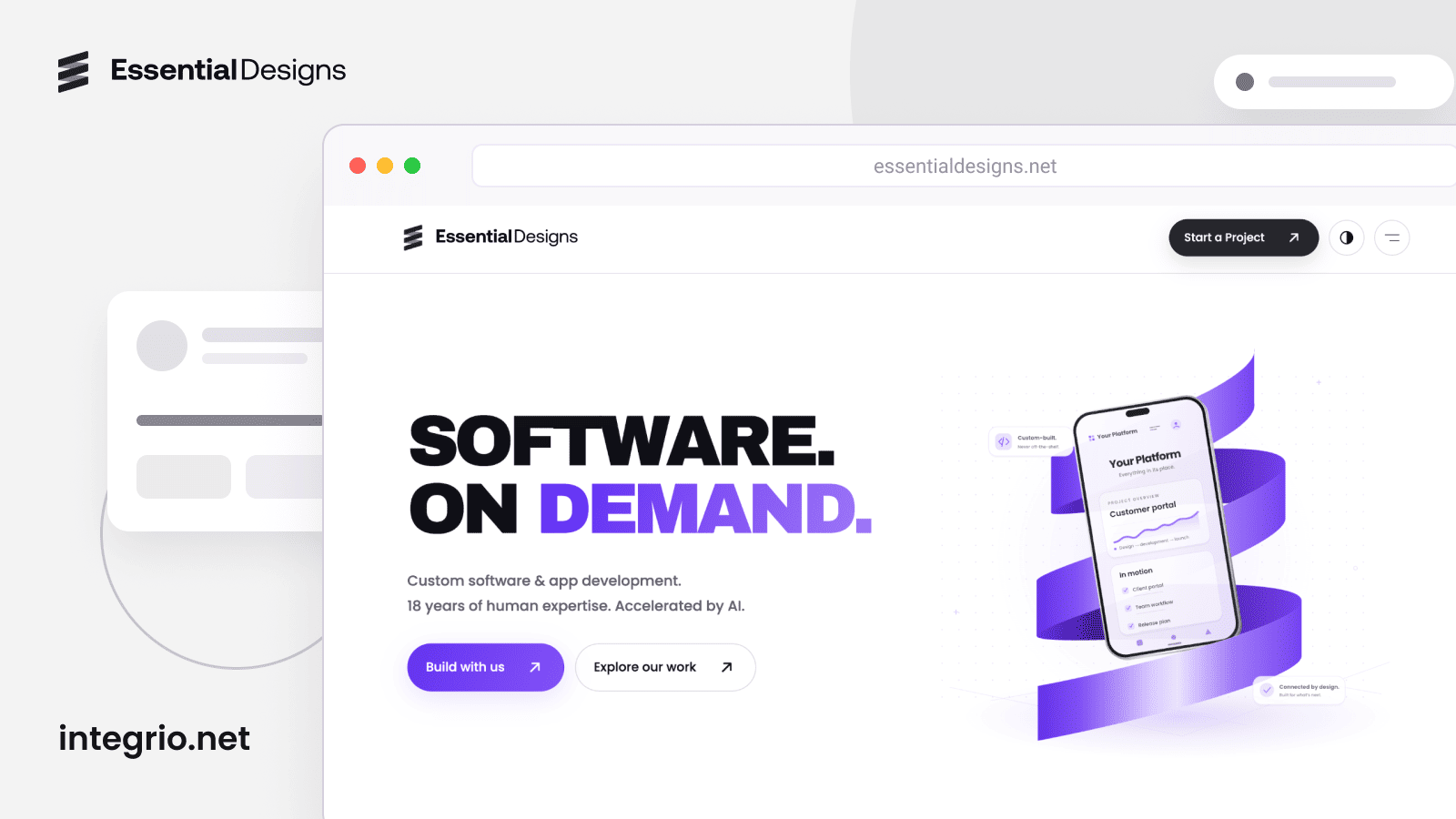
Essential Designs is a software company with over 18 years of development experience. Its mobile services cover iOS, Android, and cross-platform apps, along with the pieces that make them useful in practice: backends, admin tools, APIs, push notifications, offline data sync, UI/UX design, store submission, and post-launch support.
The portfolio mixes customer-facing and operational apps. The company built a field-operations app built for Emerson Electric. Another example of work by Essential Designs is Lifeguard, a British Columbia app for safe consumption and emergency response for Android and iOS that connects with local 911 and ambulance services.
Best for: Businesses that need a customer-facing app or an internal tool connected to business software.
06.14 Oranges
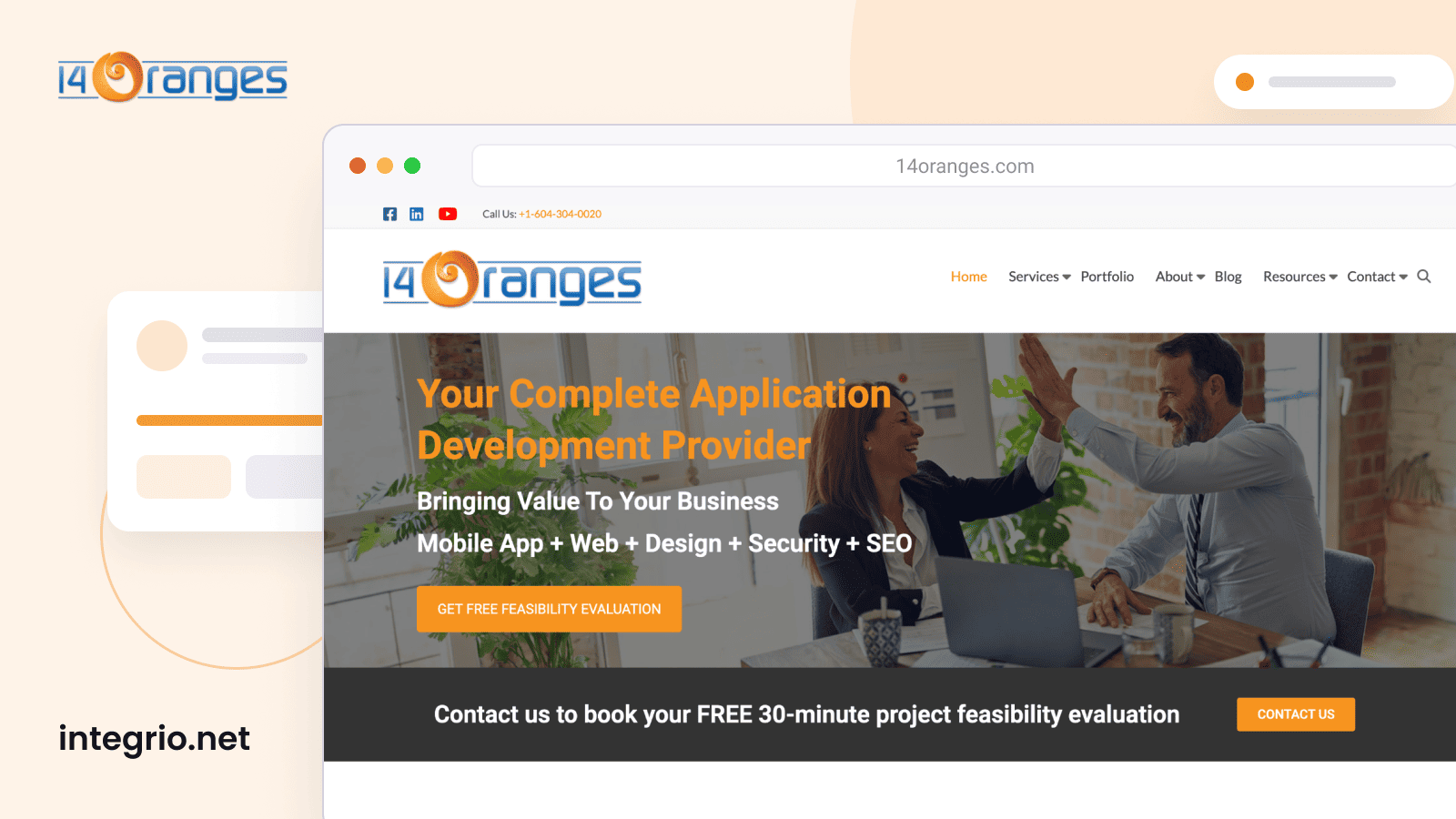
14 Oranges offers mobile app development alongside web design, e-commerce, and IT services. The company builds applications for iPhone, iPad, and Android, including offline-capable apps, dashboards, push notifications, and API integrations, with UI/UX design included.
14 Oranges focuses heavily on working with public-sector entities. Their Info Grove lets organizations manage their own app content. The portfolio includes Starlite, an app for Technical Safety BC, a Whole Home Solution app for ARRIS, and a learning and self-management app for The Royal Ottawa designed to assist Canadian veterans.
Best for: Municipalities, unions, associations, and businesses that need a managed app with content they can update themselves.
07.TTT Studios
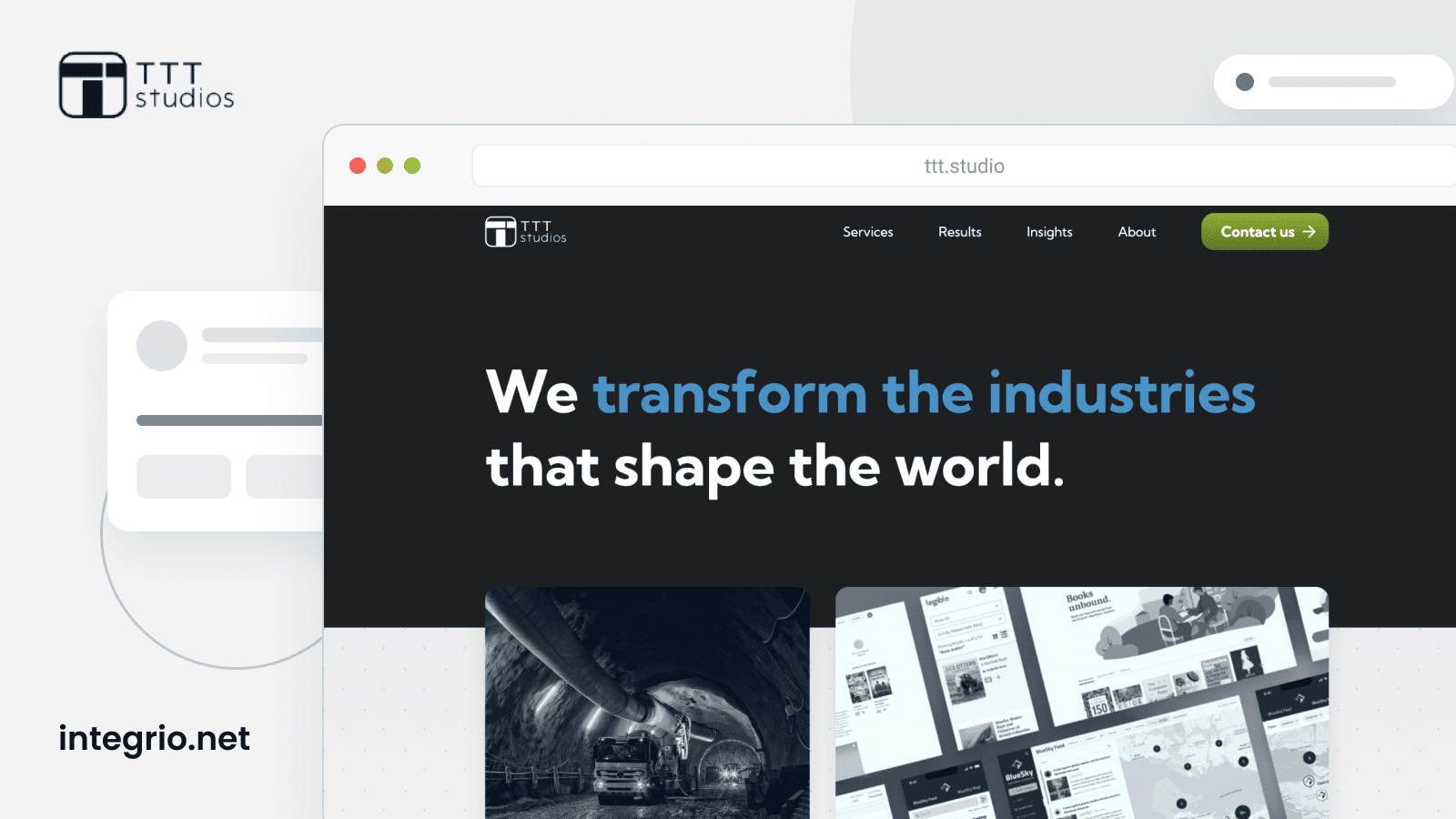
TTT Studios’s website describes its work as custom mobile, web, and AI software, along with legacy system upgrades. Its Clutch profile lists React, React Native, Node.js, and Angular, with Java, C#, and Python on the backend and AWS and Azure for cloud.
The company’s clients are mostly mid-market companies in construction, energy, and medical sectors. The mobile projects include a custom app for smart vehicles (ElectraMeccanica), for real-time monitoring and access to intelligence (Paladin Risk Solutions), and intelligent lighting management (Sengled).
Best for: Mid-sized companies that need a mobile app as part of a larger custom software or AI project.
08.Many Hats
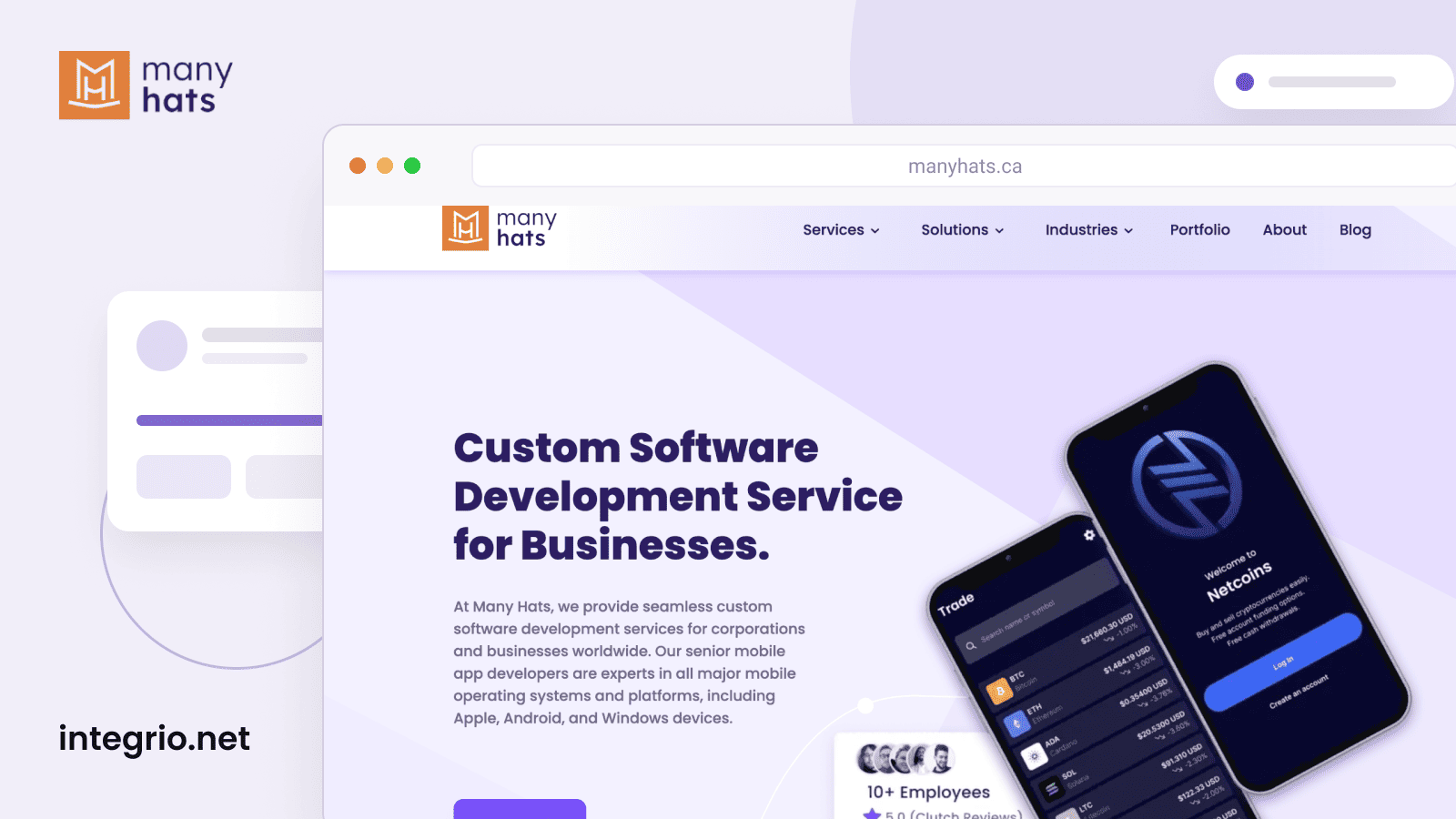
Many Hats is a studio with mobile app development as a core service. They have senior experts specializing in all major mobile OS and platforms, including Apple, Android, and Windows devices. The team uses Flutter and React Native for cross-platform applications. Many Hats also works with wearables and VR/AR projects.
Named clients include Unibroue, Phyxter, and Hydro-Québec, highlighting the company’s expertise in different business domains. Mobile portfolio examples feature projects such as Netcoins (Canada’s first publicly-traded cryptocurrency exchange), HealthNU (an app for a non-profit project), and Tailgater (connecting sports fans).
Best for: Brands and startups that want a custom cross-platform app from a small Metro Vancouver team.
09.A.Y. Technologies
A.Y. Technologies is a software company founded in 2015 and focuses on startups and small businesses. The team mostly builds hybrid and cross-platform apps with React Native. It also does web development, custom software, and UX/UI design. Other technologies it uses include React, Node.js, Spring MVC, Java, and Google App Engine.
The clients span financial services, healthcare, and other sectors. Shared portfolio projects include Craver, a mobile app platform for restaurants; Biba Play Tracker, an app with game ideas for a playground; and Rockstart, an app that connects the music community.
Best for: Early-stage startups and small businesses that want a small team to build a cross-platform app or MVP.
10.Iversoft
Iversoft is a Canadian software company headquartered in Ottawa with a small Vancouver presence. Mobile is its largest service, covering iOS, iPad, Android, and cross-platform apps, alongside custom software, API development, UX/UI, e-commerce, testing, and cloud consulting.
Its technology list includes .NET, C#, and Laravel. Clients are mostly mid-market, in education, retail, government, medical, and real estate. The mobile projects include a consumer streaming platform, a reader app for romance stories, and a mental health resources app.
Best for: Mid-sized organizations that want mobile apps built alongside a backend or business system, and that are comfortable with a team based mainly outside Vancouver.
11.Mobcoder
Mobcoder is an AI-focused firm with offices in several countries, including Burnaby, BC. According to the Clutch data, its mobile work splits roughly into iOS (35 percent), Android (25 percent), and cross-platform (20 percent). Mobcoder also offers AI, IoT, DevOps, UX/UI, and staff augmentation on AWS, Google Cloud, and Azure.
Financial services is its largest client industry, followed by consumer products and services, and education. Most of its delivery team is in India. Their mobile projects include, among others, ChatGPTree, a next-generation AI conversation platform, and Acuron, a clinical and financial analytics platform.
Best for: Companies that want a larger offshore team with a North American contact point, rather than a Vancouver-based studio.
12.Raccoopack Media
Raccoopack Media combines mobile app expertise with game development and interactive design. Its mobile page names React Native as the main framework, with apps shipped to both app stores. The studio also offers strategy design from discovery through post-launch, experience design, and ongoing project support.
The clients come from healthcare, education, non-profits, environmental groups, government, and manufacturing. Portfolio examples include My Dojo World, a habit-building app, and SafeCare BC’s Bear in Mind, a mental-health education app. It also built Invader Crusaders, an educational project on invasive species for ISCBC.
Best for: Organizations that want an education-focused app or envision an engaging game-style experience in their products.
13.Hooman Studio
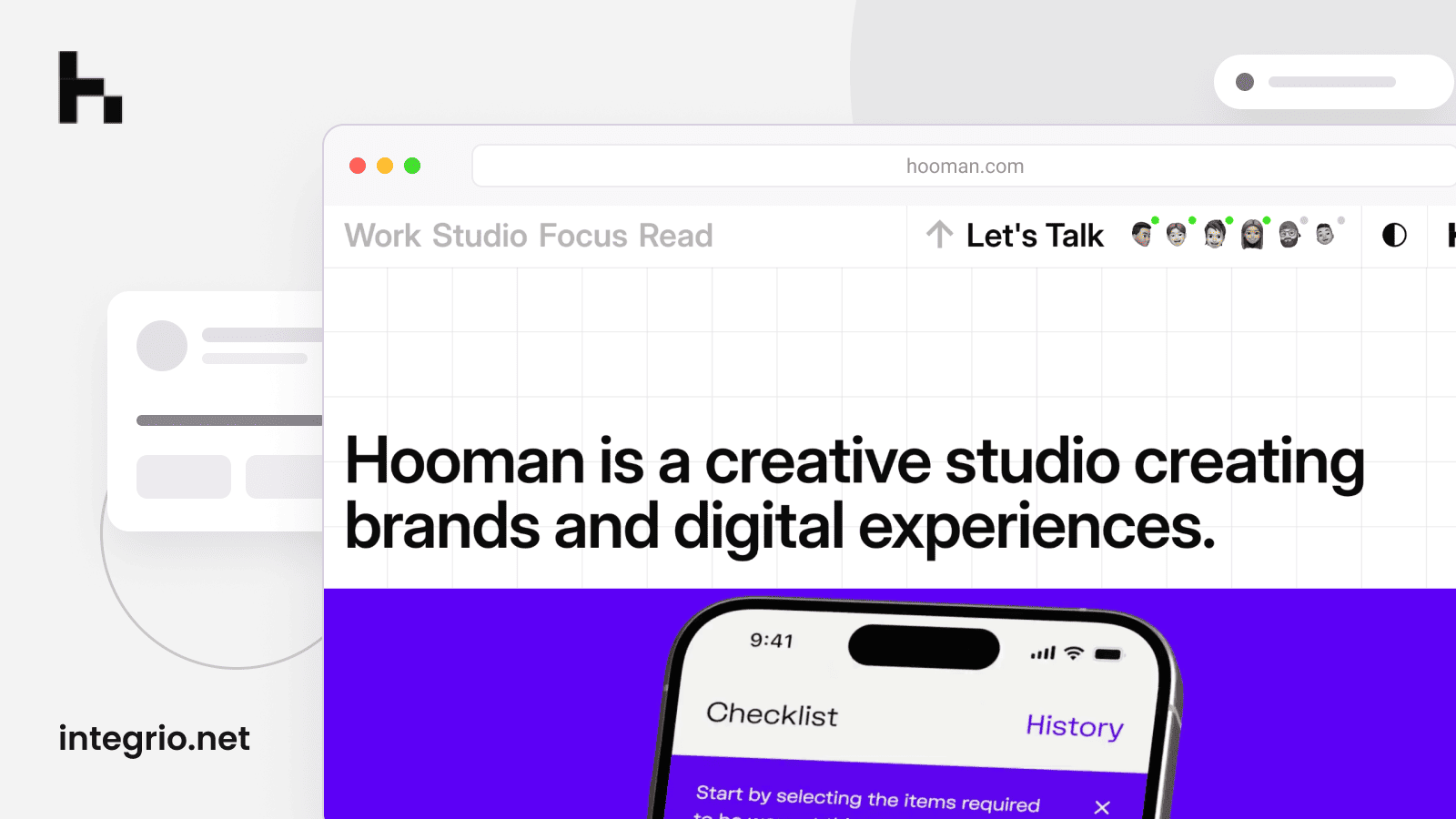
Hooman Studio is a branding, design, and development agency. It provides mobile app design and development services, including UI/UX design, product prototyping, and custom application development. The company has experience with native and hybrid apps, MVPs, integrations, AR/VR, and AI and LLM features.
The website mentions React, Flutter, Node.js, GraphQL, Firebase, and AWS services among the tech stack. Clients come from e-commerce, hospitality, health and wellness, fintech, real estate, and SaaS. Some mobile projects include Ample, a service marketplace; Pulsia, an app for health data processing; and Contractor Connect, a workforce management platform.
Best for: Consumer brands and startups that want design and development from one team, with a mobile app only or as part of a wider product.
14.AppStudio
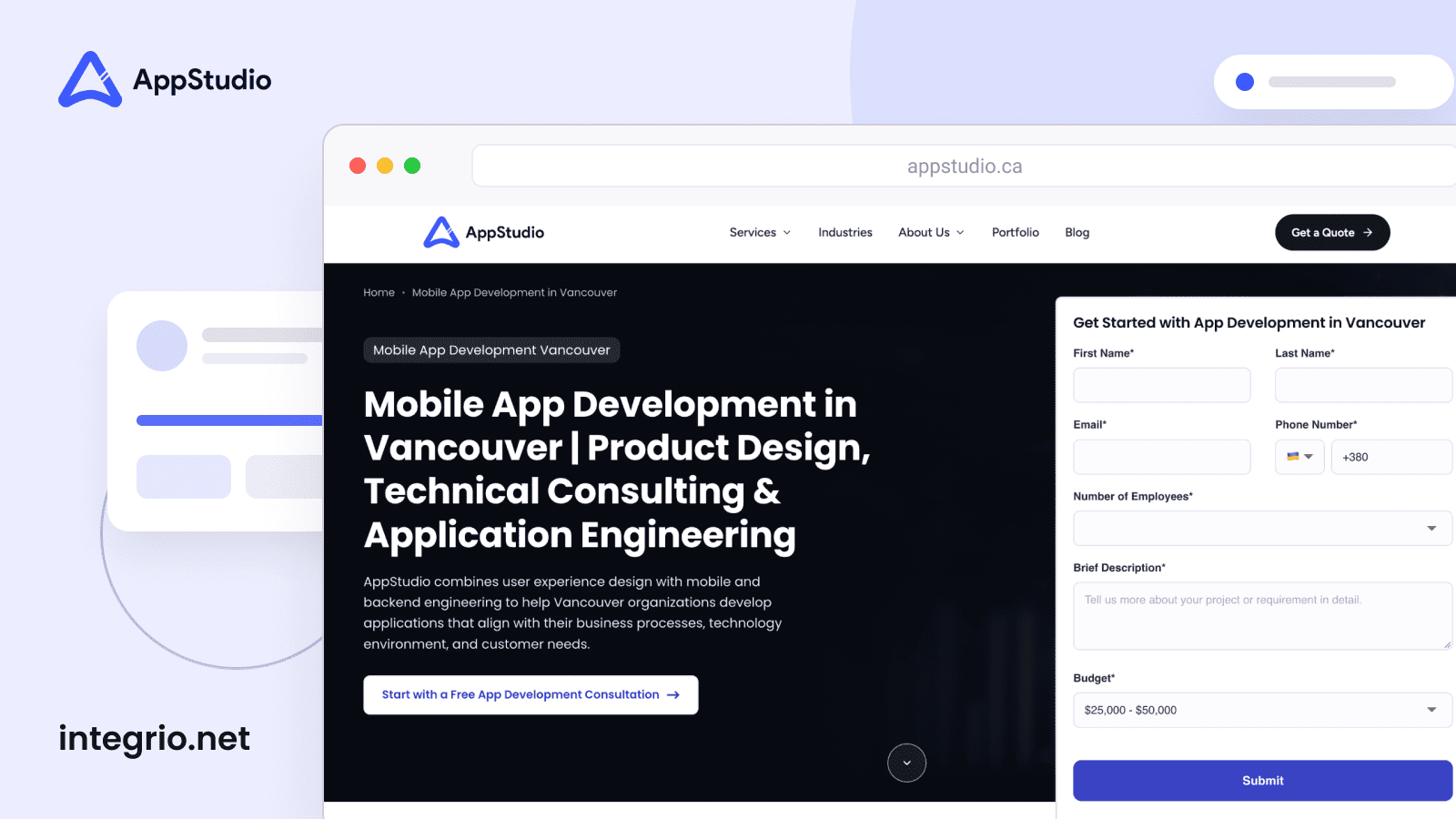
AppStudio is a Toronto-founded software company with a Vancouver office. It provides native and cross-platform mobile application development, UI/UX design, and broader software engineering capabilities. AppStudio is positioned as “one trusted partner for app strategy, design, development, launch, and ongoing support.”
Its homepage features a long list of technologies: Swift, Kotlin, React and React Native, Flutter, and more. AppStudio works with healthcare (including HIPAA-regulated projects), fintech, startup, public-sector, and defense clients. Portfolio examples include Mindset, a self-care app, RehvUp, an employee experience platform, and ECAO, a solution for Ontario’s Electrical Contractor community.
Best for: Regulated industries and companies that need a larger team covering several platforms and technologies.
15.Atimi Software
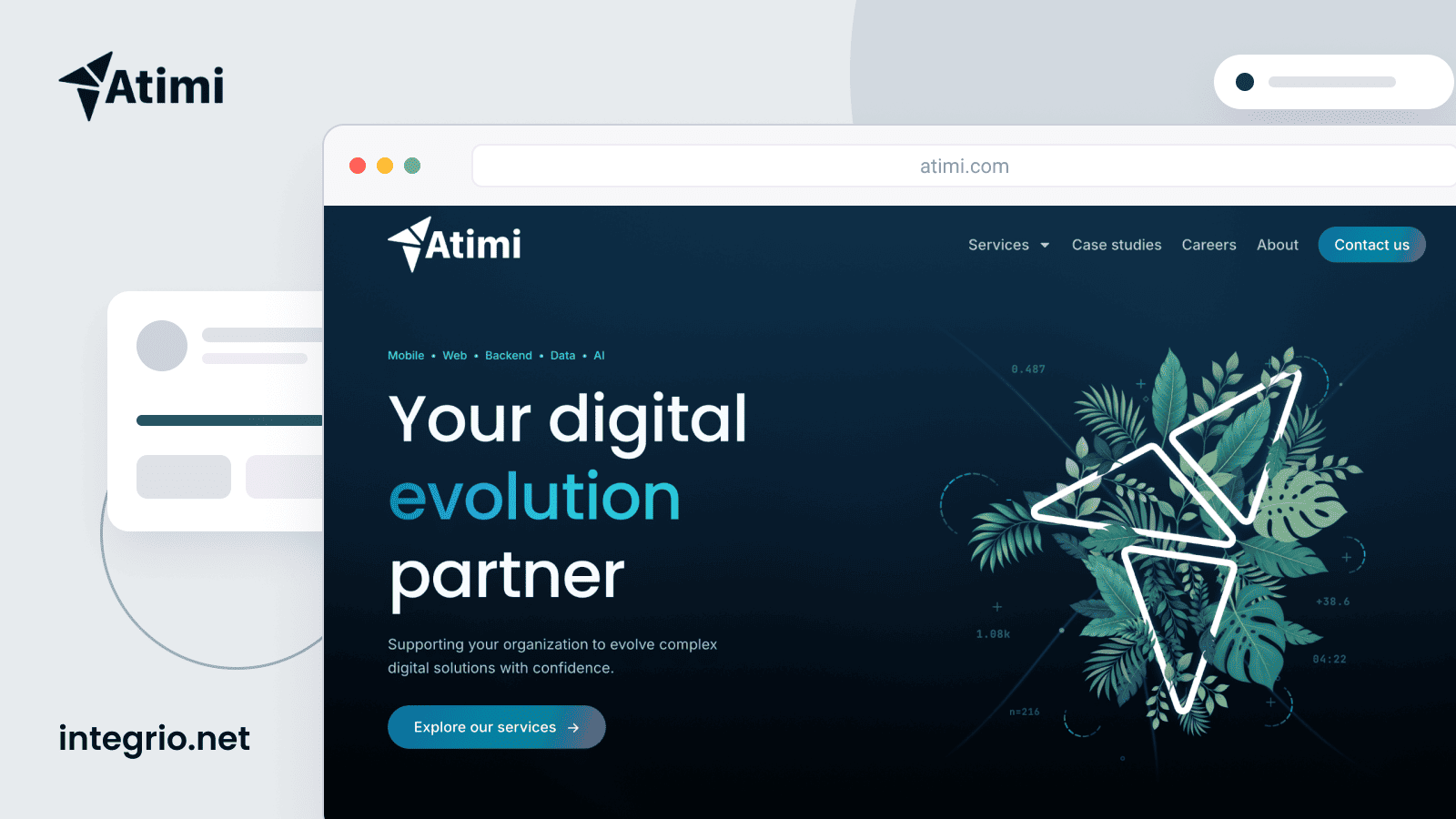
Atimi Software is a software development company founded in 2001 that has a strong focus on mobile projects. It builds iOS and Android apps for clients in finance, publishing, m-commerce, health, and education, and it is described as an Apple-certified mobility partner—one of only a handful.
One of the main advantages of collaborating with Atimi Software is its extensive experience: 25 years in enterprise software. The company’s 2008 apps for The New York Times, Warner Bros.’ The Dark Knight, and Hasbro’s Etch A Sketch were among the first 100 apps in the App Store, according to its BuiltIn profile.
Best for: Companies that want an established, mobile-only team for iOS and Android apps.
16.Latero Labs
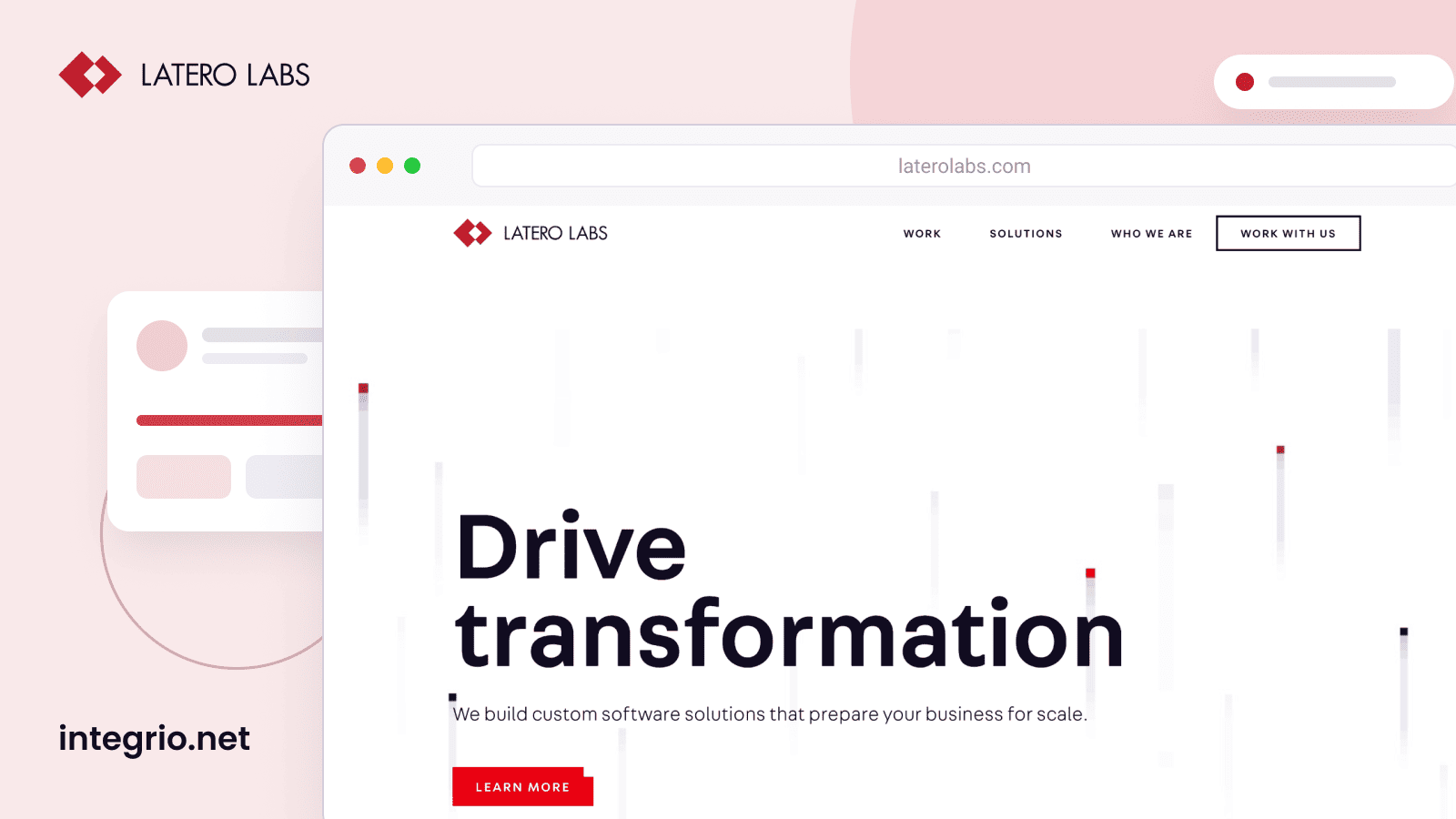
Latero Labs is a web and mobile development company founded in 2013. Mobile accounts for about 35 percent of its work, with web making up most of the rest. Services include web and mobile development, API work, design and discovery, AI integration, and ongoing maintenance.
Its strongest mobile example is Panago’s ordering app, built in React Native for iOS, Android, and web, with an API layer connecting point-of-sale systems and call centers. Another example is a React Native app for Anipet, a B2B pet product distribution company, with custom features built on top of a custom API layer.
Best for: Retail and service businesses that need a mobile ordering or commerce app—independent or connected to existing operational systems.
17.Aequilibrium
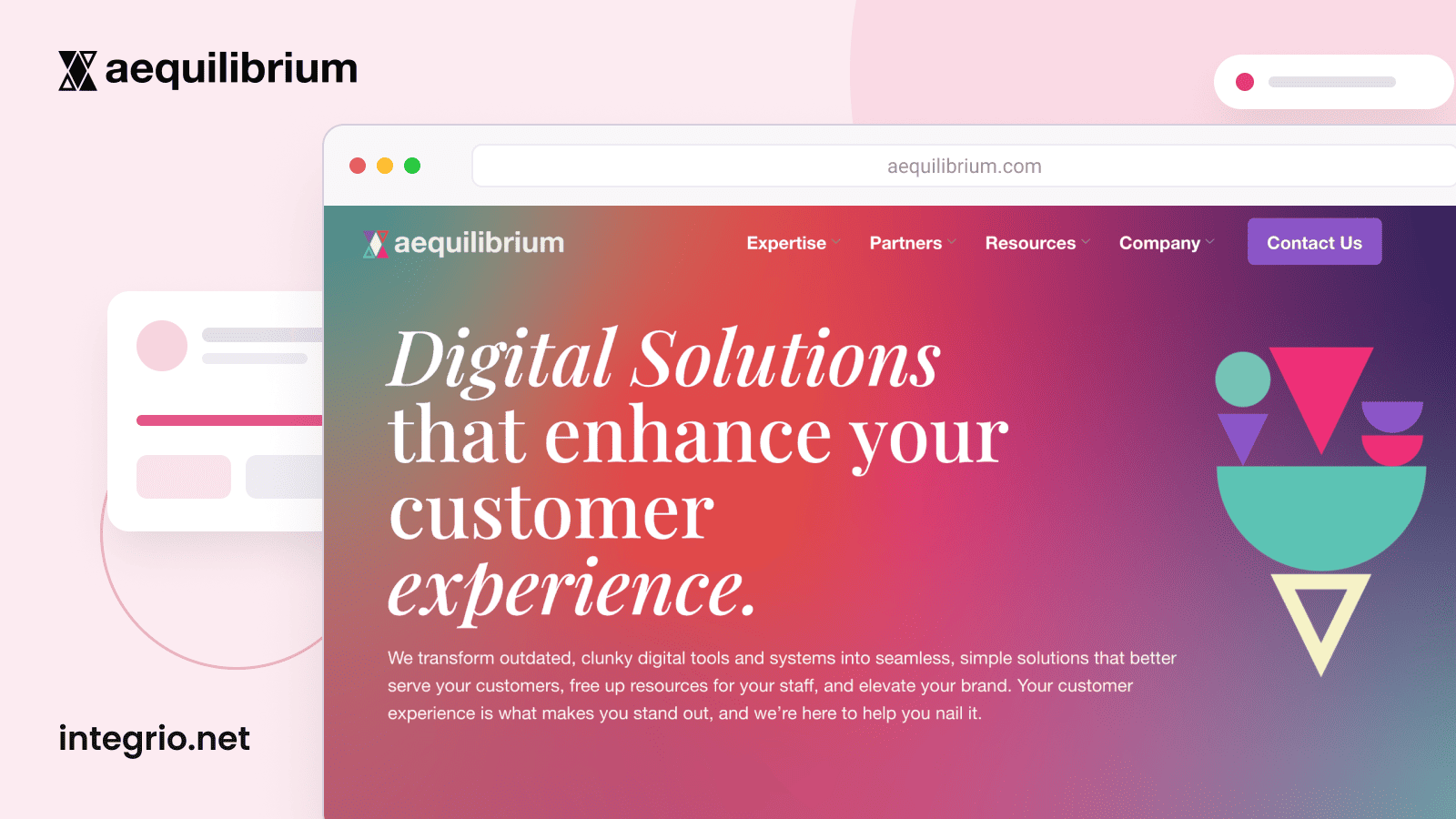
Aequilibrium is a product and software consultancy founded in 2012. Mobile is one of its core verticals, along with banking, immersive learning, and digital twin solutions. It builds iOS and Android apps mainly for credit unions and other financial institutions, including WSECU, DUCA, and Central 1.
The team has expertise in React Native, Swift, Objective-C, Java, Angular, Node, and .NET. The company often highlights the importance of mobile apps in complex, regulated industries. Notable projects include a mobile banking strategy redesign for WSECU and a digital banking platform rollout for Central 1.
Best for: Banks, credit unions, and fintech teams that need mobile apps connected to enterprise banking platforms.
18.Technorely
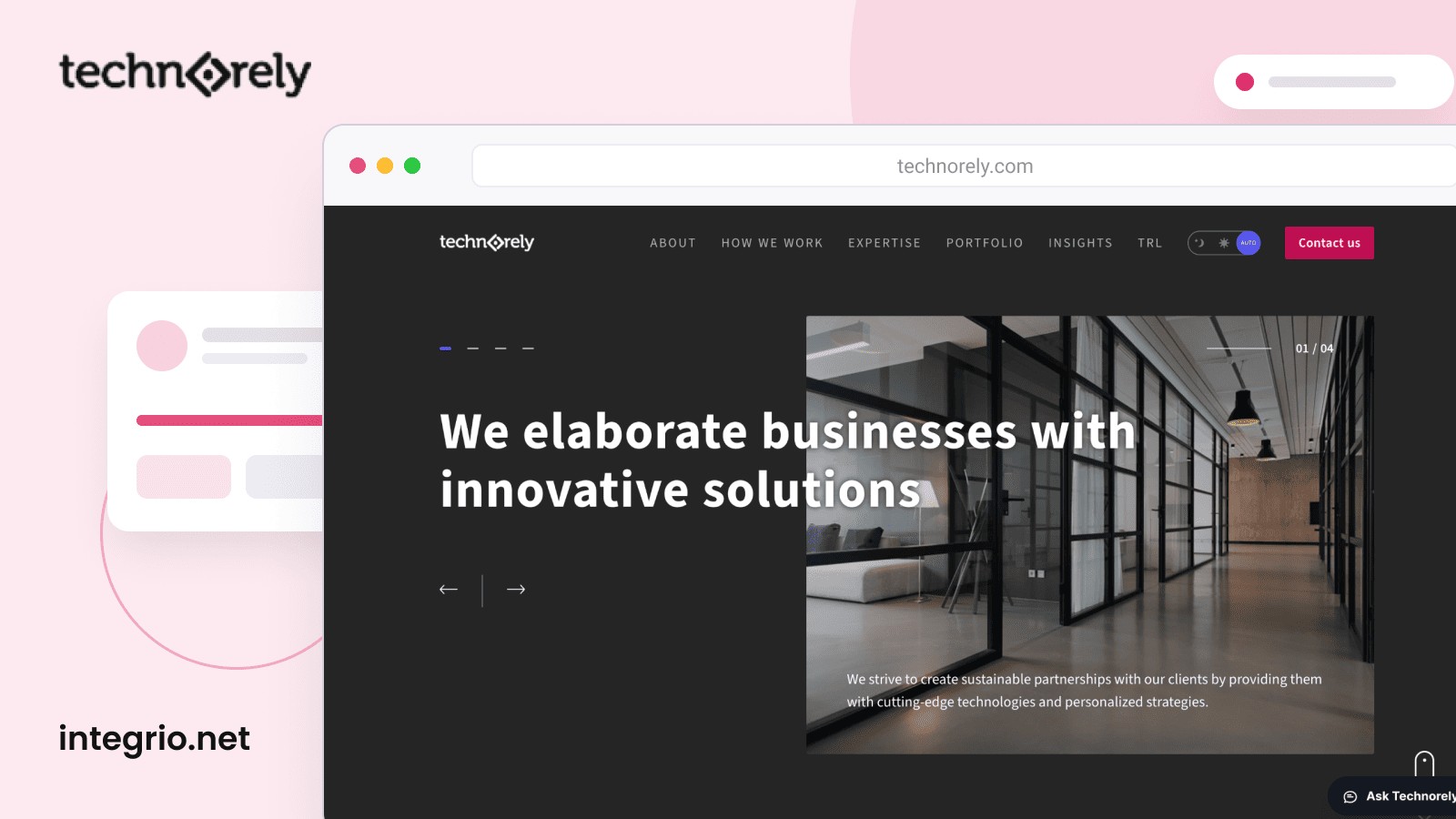
Technorely is a Vancouver software company with additional offices in Washington, DC, and Ukraine. Its mobile services cover native and cross-platform iOS and Android apps, including React Native and Flutter, plus hybrid apps and App Store submission and testing.
Mobile sits alongside blockchain, fintech, and web development. Clients come mainly from financial services and healthcare. Named projects include an app upgrade for Medentee (closed marketplace for dentistry services), as well as work for Smartlands (a security token investment platform), and Skyglyph (an aerial scouting cloud platform).
Best for: Fintech and healthcare companies that need a mobile app alongside blockchain or web platform work.
19.Appnovation
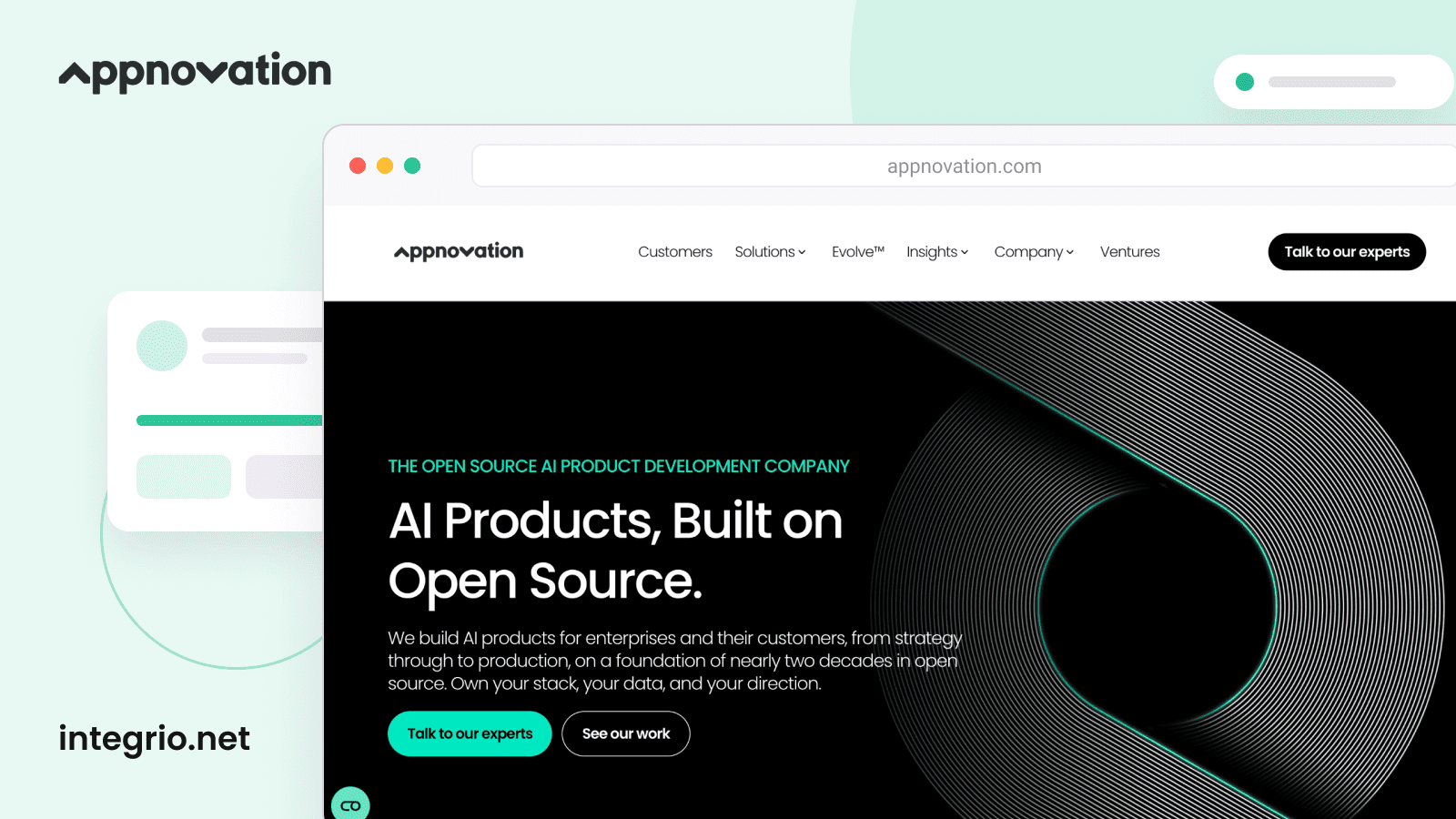
Appnovation has offices across North America, Europe, and Asia, including one in Vancouver. It is an AI-focused product company that builds production-ready products primarily on open-source solutions. Its mobile services page covers native iOS and Android, hybrid and mobile web apps, business analysis, UX testing, wireframing, custom design, integration, QA, app-store publishing, and developer staffing.
Portfolio examples include mobile solutions for a vast range of domains: finance, insurance, healthcare, media and entertainment, retail and consumer goods, technology and telecommunications, travel and tourism, and non-profits. For example, the company partnered with Pfizer on an AI toolset and with Google on an AI innovation project.
Best for: Enterprises that want AI expertise and mobile built as part of a larger digital platform.
20.Jelvix
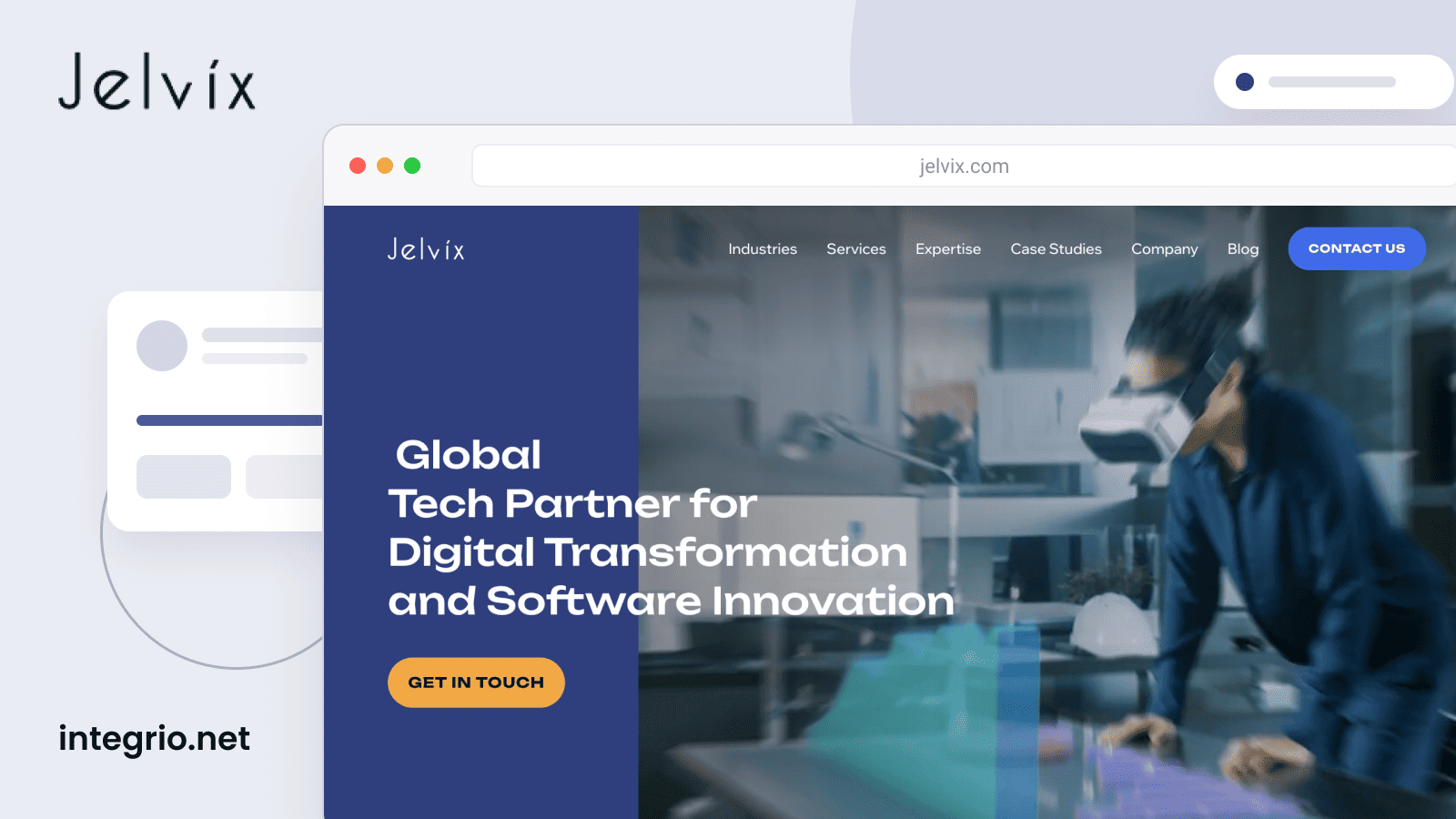
Jelvix is a software company headquartered in Tallinn, Estonia, with about 15 years in business and an office in Vancouver. Its mobile page names React Native, Flutter, native iOS (Swift), Android (including AOSP), HTML5, and PWAs among its competencies. The team provides a full scope of mobile services, from consulting to maintenance.
Jelvix serves real estate, healthcare, fintech, insurtech, logistics, retail, and other industries. Portfolio examples include an in-store retail solution for Auchan, a mobile health app for cancer patients, and a music production tool for singers and music producers.
Best for: Companies that want a large remote engineering team with mobile capabilities and a representative office in Vancouver.
How to Choose a Mobile App Development Company in Vancouver
A shortlist only helps if you know what you are measuring each app development company in Vancouver against. To understand what a good fit means for you specifically, pay attention to these five areas.
Define your mobile app requirements
State clearly what your app has to do and who your user is. Finalize the basic project requirements:
- Target users: customers, employees, or partners.
- Core functionality: e-commerce, a marketplace, a booking system, or another business workflow.
- Product architecture: a standalone mobile app or a mobile interface for an existing SaaS platform.
- Technical requirements: AI features, IoT connectivity, third-party integrations, access to device capabilities (camera, GPS, biometrics), etc.
- Platforms: iOS, Android, or both.
With this list in hand, look for partners who have built something similar.
Compare native and cross-platform expertise
Native development gives the most control over performance and device features. A cross-platform approach lets you use a shared codebase, which often lowers cost and speeds up delivery. Neither option is better by default—it all depends on the context. What matters is the team’s experience and their reasoning for recommending one approach for your project.
Review portfolio relevance, not just portfolio size
A long client list says little if none of the projects resemble yours. Look for work with comparable workflows, technical constraints, integrations, and user requirements. Where possible, ask for a live demonstration or at least case studies. A good case study (explains the problem, technical decisions, and measurable result) is an illustrative piece of evidence.
Check testing, security, and long-term support
Most quality problems are preventable and fixable before launch. To evaluate the QA and security practices, ask how the team handles:
- Quality assurance: manual and automated testing, device coverage, and who signs off on a release.
- Security practices: secure data storage, authentication, encryption, and how vulnerabilities are found and fixed.
- Accessibility testing: support for screen readers, text scaling, and contrast requirements.
- Release management: how builds move from staging to production.
Ask what happens after launch: whether the team handles store deployments, monitors performance, fixes bugs, and supports updates.
Understand ownership and engagement terms
Settle the commercial terms before work begins. Ask how the engagement is structured (fixed price, time and materials, or a dedicated team), how pricing works, who is responsible for what, and how communication is handled.
In the contract, check these points:
- Ownership: source code and intellectual property rights.
- Documentation: enough that another team could take over the project.
- Third-party licenses: who holds them and who pays for renewals.
- Handover procedures: how everything is transferred.
- Post-launch support obligations: response times, scope, and cost.
How Much Does Mobile App Development Cost in Vancouver?
There is no fixed Vancouver price for mobile app development services in Vancouver. The estimates fall into three broad tiers. The ranges below are not a quote, but rather a planning baseline for budget conversations.
| App complexity | What it typically includes | Estimated budget (CAD) | Typical timeline |
|---|---|---|---|
| Simple | One or two platforms, a handful of core screens, basic user flows, minimal backend, few or no integrations | 15,000 to 50,000 | 2–4 months |
| Moderate | User accounts, custom UI/UX design, backend and database, API and payment integrations, an admin panel | 50,000 to 150,000 | 4–8 months |
| Complex | Real-time features, AI functionality, multiple third-party integrations, advanced security, regulatory requirements, scalable architecture | 150,000 to 300,000+ | 8–12+ months |
These figures cover the build and initial release, but not post-launch maintenance, app store fees, third-party subscriptions, or marketing.
The main cost drivers include:
- Features and complexity: a number of screens, user workflows, custom features, etc., define the scope.
- Platform requirements: native and cross-platform approaches set different timelines.
- UI/UX design: custom interfaces, accessibility requirements, and usability testing add design time.
- Backend and integrations: servers, APIs, databases, and third-party services make up a large share of the budget.
- Testing and security: QA across devices, data protection, and regulatory requirements vary across apps.
- Maintenance and updates: apps need ongoing work after launch: bug fixes, compatibility updates, and new features.
Hourly rates also vary by team, so compare total project cost and scope, not rates alone.
Why Consider a Vancouver-Based Development Partner?
The proximity that comes with Vancouver app development helps in some situations. Working in the same time zone makes scheduling simple, and a quick call or same-day review doesn’t depend on overlapping hours. In-person meetings are also possible when needed.
Local collaboration is most useful when:
- Stakeholders are closely involved (product owners, executives, or department heads need to review progress often and give fast feedback).
- Approvals are complex (there are several teams or regulated processes between a decision and sign-off).
- Coordination is ongoing (the app connects to internal systems, field teams, or other vendors, and the work does not end at launch).
A Vancouver address does not guarantee better work. Judge every provider, local or remote, on the same points: technical expertise, relevant project experience, communication practices, and delivery capability.
Questions to Ask Before Hiring a Mobile App Development Company
Interviewing development partners goes faster with a fixed set of questions. Use these with every top mobile app development company in Vancouver that makes it to your shortlist and compare the answers.
01.
Have you worked with mobile applications similar to ours?
02.
Who will work on our project day-to-day, and will any part be handed off to a subcontractor?
03.
Which technologies and architecture do you suggest for our app, and why?
04.
How do you test the app, check its performance, and protect user data?
05.
How do you build your estimates, manage scope changes, and keep us updated on progress?
06.
Will we own the source code and intellectual property once the work is paid for?
07.
What support and maintenance do you offer once the app is live?
08.
Can you share case studies or put us in touch with past clients?
If a company avoids a question or answers in vague terms, treat that as useful information.
Final Thoughts
The best mobile app development company in Vancouver is not the one with the longest client list—it’s the one that fits your project. Look for relevant technical expertise, proven experience with similar apps, clear communication, transparent estimates and processes, and a plan for support after launch. Use the questions above to test each of these before you commit.
Integrio Systems is a reasonable option if you need custom mobile development, enterprise applications, or a mobile app that connects to existing business systems. Our team works across native and cross-platform technologies, and the Vancouver office handles project management and business analysis.
If you want to talk through your app idea with a software development company in Vancouver, reach out to discuss your project.
FAQ
Find three to five companies with relevant project experience and technical expertise. Compare their proposals, paying attention to the service offerings, suggested development approach, and the terms of post-launch support, among other things. Don’t rely on the feedback and rankings alone.
A simple app will cost roughly CAD 15,000 to 50,000. For apps of moderate complexity, costs range from CAD 50,000 to 150,000, and complex apps start at CAD 150,000. Features, custom design, backend integrations, and the number of platforms move a project between tiers.
It takes two to four months to build a simple app (and probably less for an MVP with a tight feature set). Moderate-complexity apps take four to eight months to finish, while complex projects take eight to twelve months or more. Timelines depend on project scope: features, third-party integrations, thorough testing, approval timing, and other factors.
Native development (Swift for iOS, Kotlin for Android) works best for apps that require deep use of platform features. Cross-platform frameworks (React Native, Flutter) reduce build and maintenance effort. The right choice depends on your requirements, budget, and the skills your team will need over time.
Yes, most providers can take over existing apps for maintenance, updates, and modernization. To be sure, check the company’s official website or ask directly. Before hiring a development team, confirm it has experience with your application’s technology stack, codebase, integrations, and deployment processes.
A proposal should cover project scope, deliverables, the technology stack, estimated costs, and a timeline with milestones. It should also name team roles and responsibilities, describe testing and security practices, state who owns the source code and intellectual property, and set out post-launch support terms.
Contact us
